Science: The Super Kamiokande
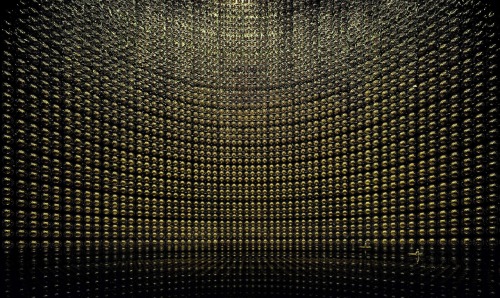
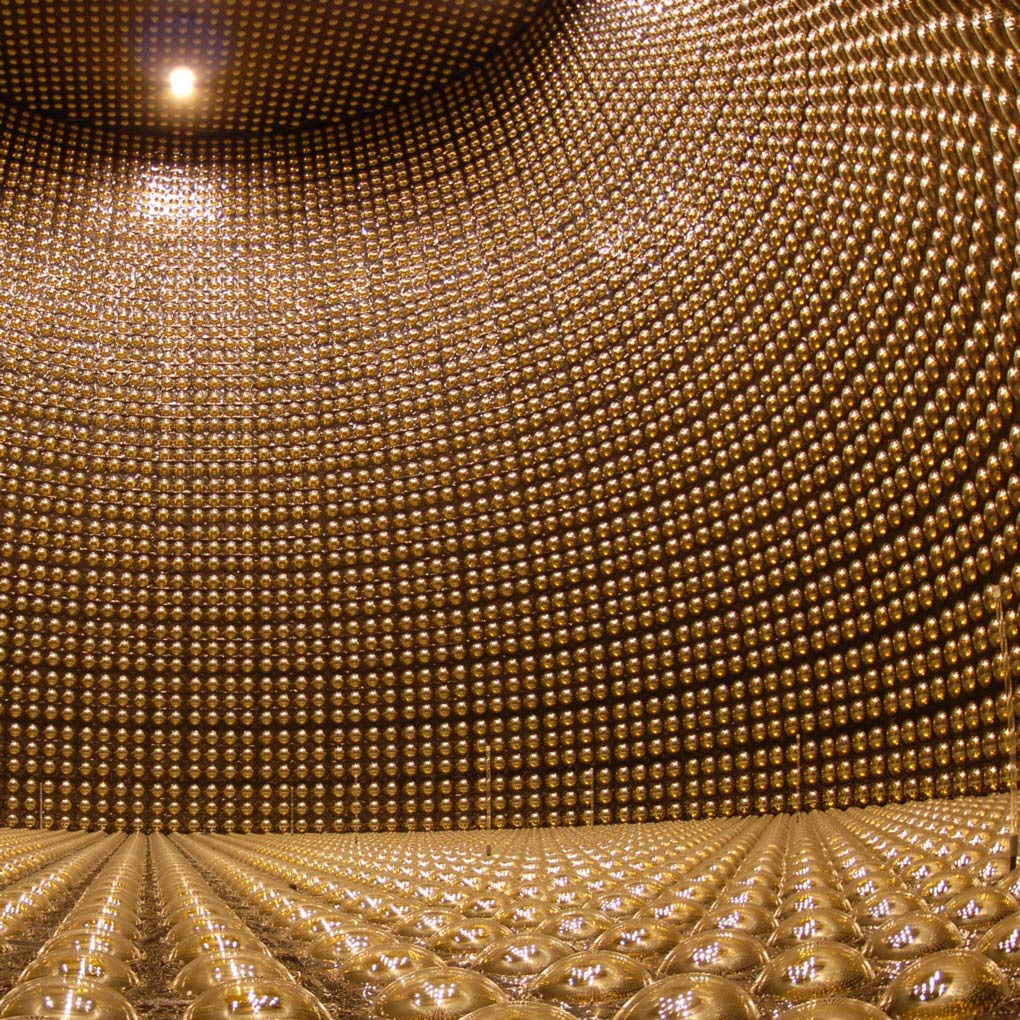
The Super Kamiokande (Kamioka Neutrino Detection
Experiment) is a neutrino observatory located under Mount Kamioka in
Japan. It is designed to observe solar and atmospheric neutrinos,
neutrinos from supernovae, and aims to search for proton decay. It is
a cylindrical structure measuring about 40 m tall and 40 m across, is covered in over 11,000 photomultiplier tubes (PMTs), and filled with
50,000 tons of pure water.
Neutrinos weakly interact with other particles, making it extremely
difficult to detect them and observe their properties; in fact, they
cannot be directed detected at all. Detectors are built underground to
isolate it from other radiation. When a neutrino passes through the
Super-K’s water tank, it will sometimes (hopefully) collide with a
quark, causing it to change into a charged lepton (electron, muon, or
tau). The very short version of what happens next is that the lepton
will travel faster than the speed of light in water (not in
vacuum), polarizing the water molecules; when they return to their
ground state, Cherenkov radiation is emitted in a flash of light, which
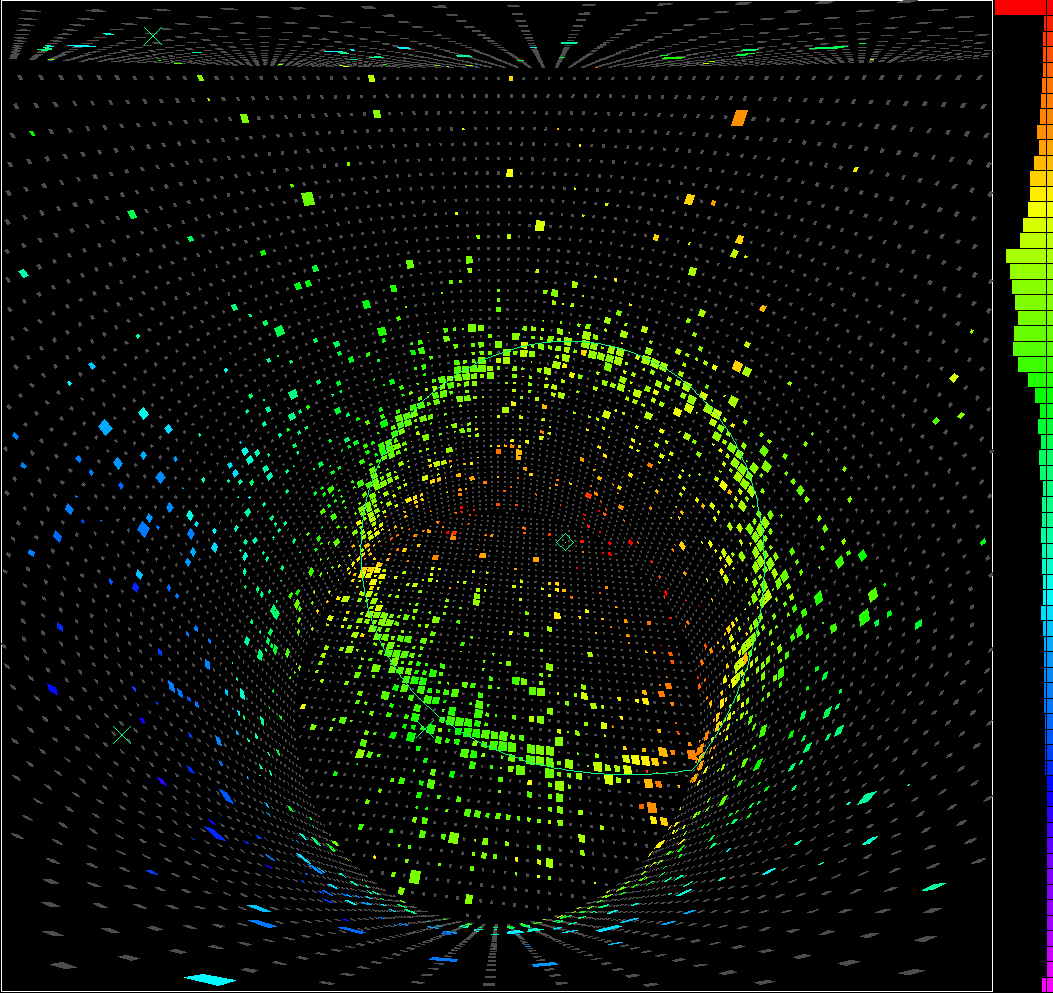
the PMTs detect. The last image is of a Cherenkov ring by an electron
created from a neutrino collision in the Super-K, in perspective view.


No comments:
Post a Comment